Skip to content

Search

Cart
  Product image
  • :

Subtotal:
Tax included and shipping calculated at checkout
View cart
Your cart is empty

Clothing as a symbol of the bond between two people

Wearing an item of clothing connected to someone else

"Linked clothing " was born from a simple desire: to create clothes that tell a story of a relationship. Not just a story of style or trend, but a tangible, almost invisible link that connects two people through what they wear.
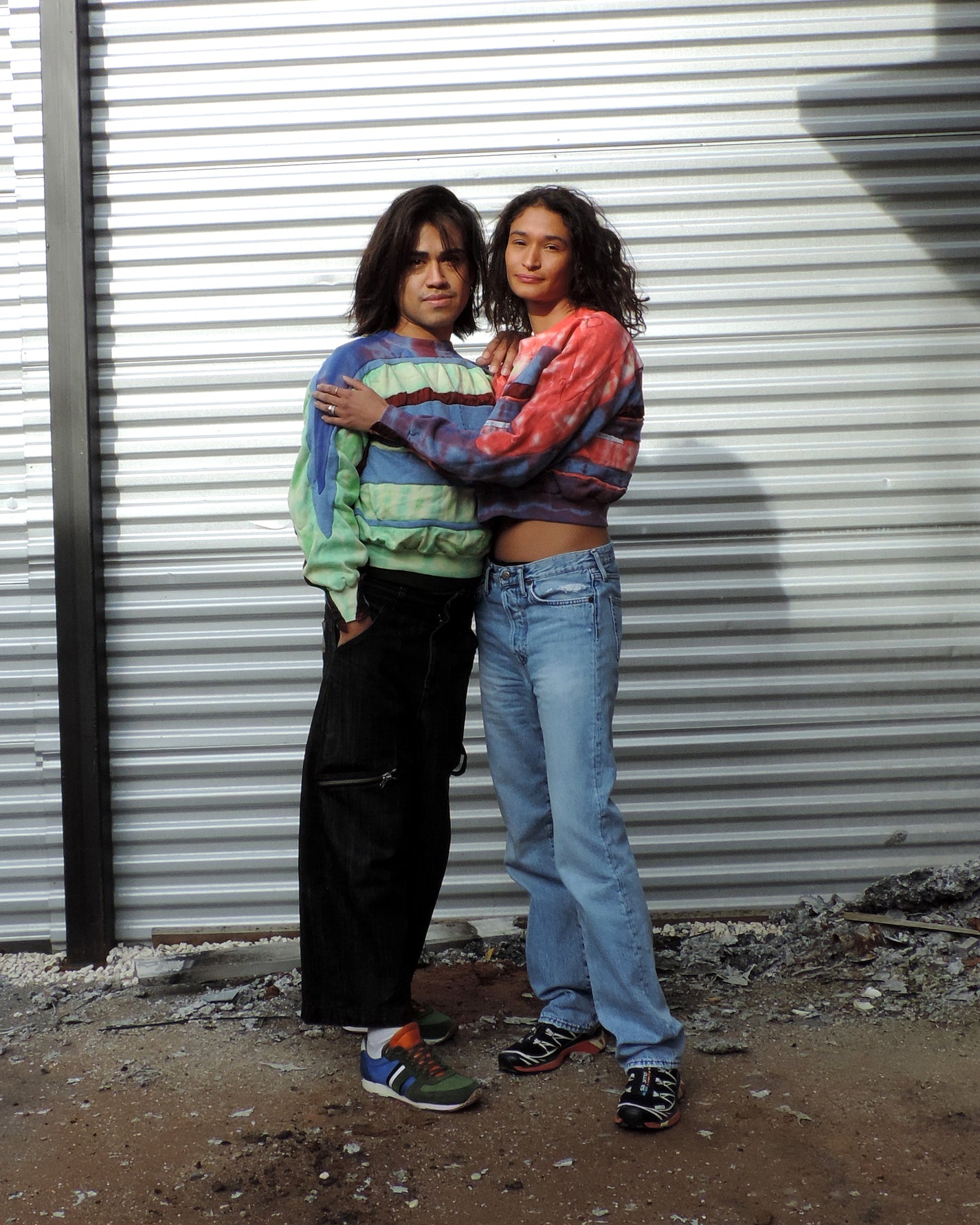
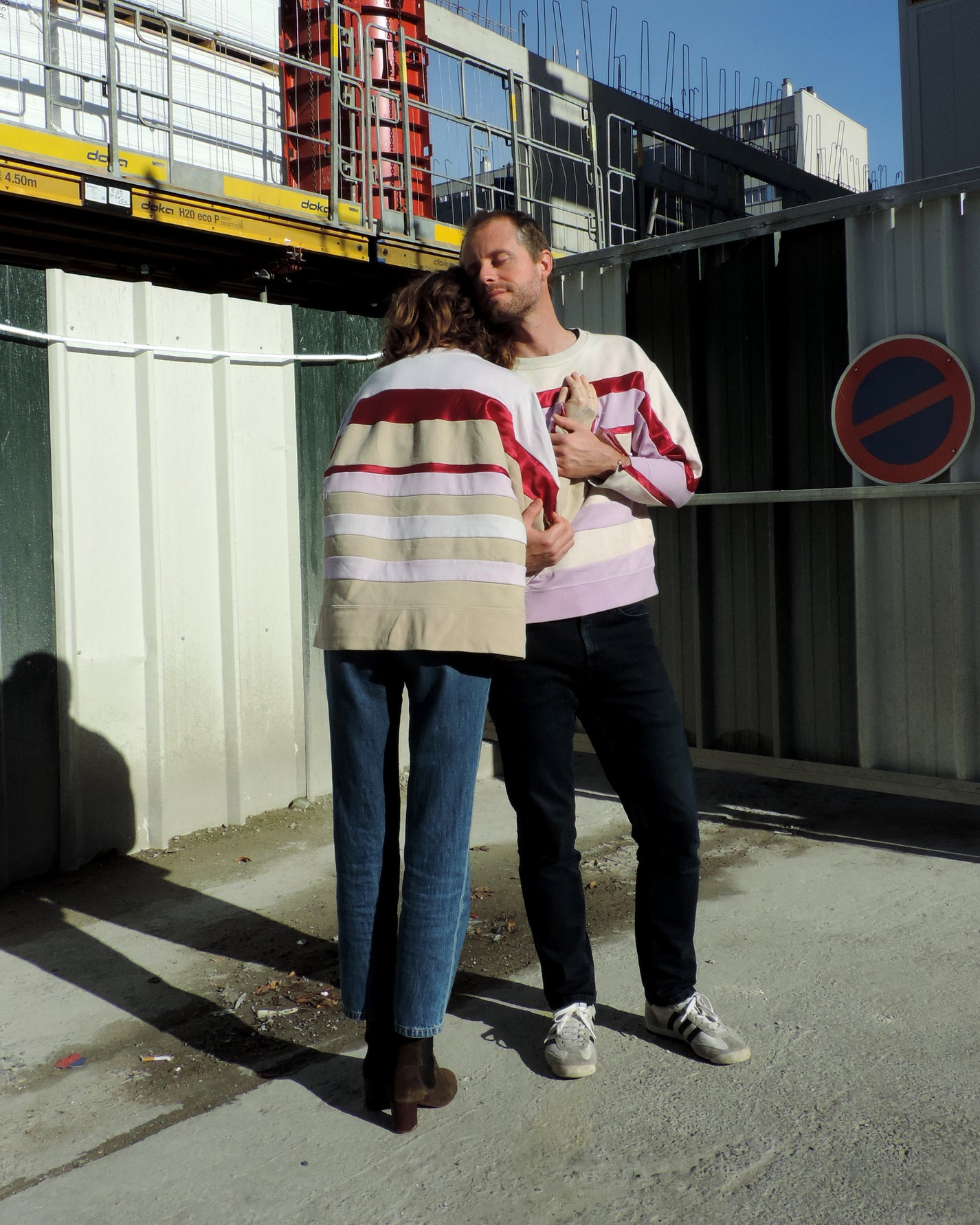
Each piece works in pairs. One garment is always a fragment of another. They can be bought as a pair or alone, worn together or separately, like pieces of a puzzle where you don't always find the other half. An imaginary thread that connects two bodies, two journeys, two moments in life.

Wearing a matching garment means wearing a piece of a shared history. Even when you don't know the other person who owns the matching piece, the idea of ​​that connection remains. The garment then becomes more than just an object: it becomes a subtle symbol of relationship.

Gift of upcycled t-shirts to share

The linked garments are shared among friends, relatives, lovers, or even strangers. Each person wears a standalone piece, but one that comes from a whole. A fragment of the other is always there, sewn into the garment's construction, visible or sometimes more discreet.

This duo approach also transforms the way we give clothing. An upcycled t-shirt can become a gift to share, a textile object carrying a shared memory. Giving or wearing these upcycled garments then becomes a simple and poetic way to remind people that clothing can hold much more than its primary function: an intention, a relationship, a memory.
UPCYCLED DUO TEXTILE CREATIONS

Transforming t-shirts with a minimalist cut

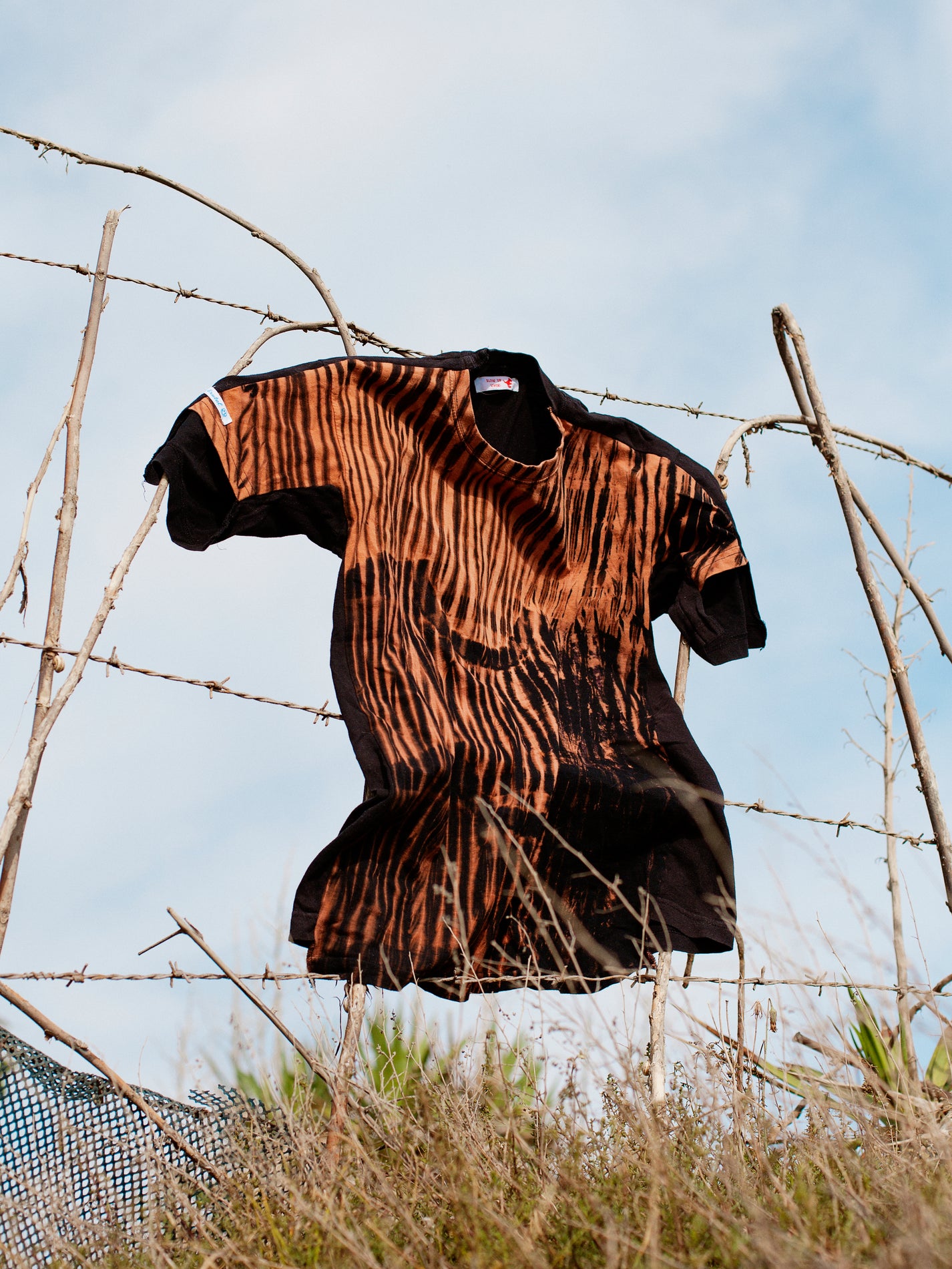
The very first garment created using this method was a t-shirt. The approach was deliberately naive: cutting a simple t-shirt shape from the front of two existing t-shirts. Like a trompe-l'œil, almost childlike, it evoked a simplified view of pattern making.

The cut pieces are then swapped. Each t-shirt thus becomes a hybrid of two different garments, blending a front and a back from two distinct textile histories. Two garments become a duo, two pieces that continue to exist separately while remaining linked by their construction.

Mix and match clothes to create unique combinations

The linked garments are made from carefully selected second-hand clothing. Certain fragments are exchanged, moved, and recomposed to create a new piece.

The result is never perfectly symmetrical, nor completely smooth. These variations—in color, proportions, and seams—are not flaws, but the signature of each upcycled garment. They bear witness to the transformation of the original garment and the creative process. Nothing is standardized: each pair has its own variations and becomes a unique piece.

You can discover the different models of "related clothing" t-shirts currently available in the shop.

EVOLUTION OF BOUND CLOTHING: SHAPES, CUTS AND ARTISAN TECHNIQUES

Applying an upcycling concept in several forms

Over time, the concept evolved and adapted to other forms. After t-shirts, sweatshirts were treated differently: no longer by cutting one sweatshirt shape from another, but by playing with stripes. Plain sweatshirts become striped thanks to the exchange of fabric strips between two pieces.

Today, the work goes further. The trousers and garments are completely redesigned. The trompe-l'œil cut of the trousers remains, but the cut is now conceived independently of the original garments, to fully match the style and design requirements of the brand.

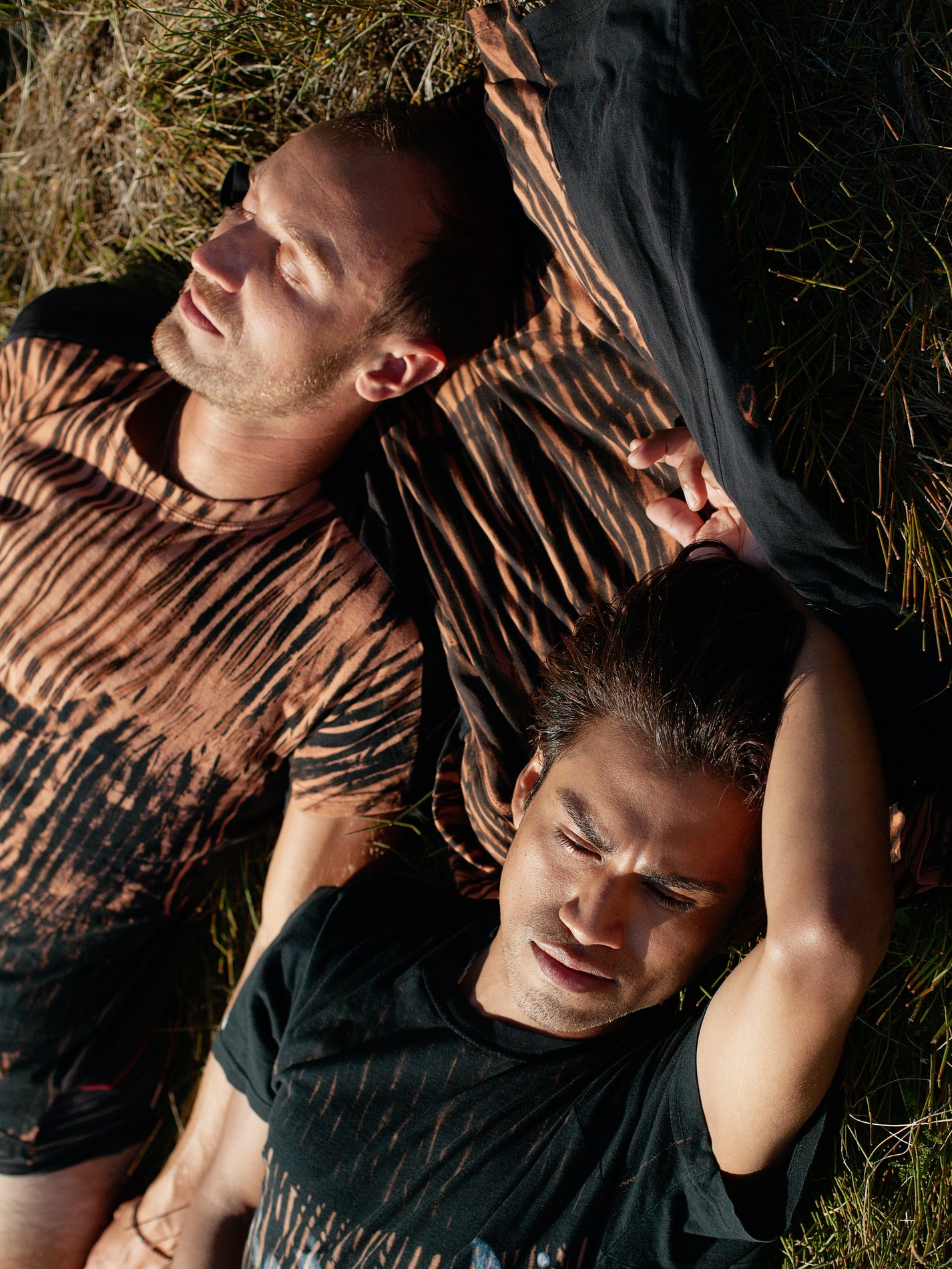
The new t-shirts also follow this trend. More oversized, they sometimes require cutting from more than two pieces: black t-shirts form the main duo, complemented by white t-shirts that elongate and reshape the silhouette. This interplay of colors accentuates the trompe-l'œil effect and highlights the mix of original garments.

Traditional techniques applied to upcycled clothing

Each piece can incorporate different artisanal techniques that enrich the garment. Embroidery, screen printing, or dyeing extend the transformation process and give the textile a new identity.

The first t-shirts, for example, were bleached using folding techniques inspired by Japanese Shibori, creating unique patterns. Other pieces feature embroidery done in pairs, as a mark of recognition between two related garments.

The labels—memories of my childhood—coexist with those of the original garments, deliberately left visible. They appear as traces, fragments of textile history that continue to live on in a new creation.

Linked clothing offers another way of thinking about upcycled clothing. From second-hand garments, they create unique pieces that connect two individuals, two textiles, and two stories.

Through textile experimentation, upcycling, and artisanal techniques, each creation becomes a meeting point between transformation and relationship. Wearing a garment with a connection is ultimately wearing a fragment of a story that continues to circulate.

Find all "related clothing" in the shop.

We use cookies to ensure you get the best experience on our website.